Project Overview
Challenge
Heineken’s eCommerce platform relied heavily on call centers and manual processes, causing inefficiencies and frustrating users. This slowed down order processing and hindered customer satisfaction. The challenge was to design a scalable, digital-first solution that would streamline customer journeys and provide an efficient, user-friendly experience across both mobile and desktop platforms.
My Role
As the Lead UX Designer, I led the entire project from research to implementation. My responsibilities included conducting stakeholder and user interviews, developing personas and user journeys, creating wireframes, and performing usability testing to inform design iterations. The focus was on reducing friction in the ordering process and enhancing the overall user experience.
Approach
• Conducted field studies and competitive analysis to understand user behavior and pain points.
• Designed personas and mapped user journeys to align business goals with customer needs.
• Facilitated stakeholder workshops to gather feedback and refine features.
• Developed an intuitive information architecture and created wireframes for usability testing.
• Iterated on design based on insights from continuous testing, ensuring the platform met both user and business needs.
Outcome
• 25% increase in conversions: The redesigned platform streamlined the order process, reducing friction, and enabling users to complete transactions more efficiently.
• 30% increase in traffic: By offering a seamless and intuitive user experience, the platform attracted more repeat and new users, growing the customer base.
• 20% rise in revenue: The improved user journey and personalization drove more purchases, significantly increasing Heineken’s eCommerce revenue.
• Improved user satisfaction
Feedback showed a measurable improvement in customer satisfaction, with users praising the ease of use and faster ordering process.
Challenge
Heineken, a global leader in the beverage industry, was grappling with a critical issue: their eCommerce platform heavily relied on call centers and manual interventions to process orders. This created operational inefficiencies, slowed down processes, and negatively impacted the overall customer experience. The outdated system resulted in long wait times, a confusing interface, and frequent purchase abandonment. Heineken needed a robust digital solution that streamlined the customer journey, eliminated friction points, and increased conversions across mobile and desktop platforms.
As the Lead UX Designer, I led the project from discovery to delivery, focusing on user needs and aligning them with business goals. The goal was to design a scalable, user-friendly platform that allowed customers to seamlessly navigate and complete their orders with minimal support, reducing reliance on the call center and improving overall customer satisfaction.
Key Objectives:
• Reduce dependence on manual processes.
• Improve the customer experience across all touchpoints.
• Increase online conversions and streamline checkout.
• Ensure scalability to handle high transaction volumes.
My Role
As the Lead UX Designer, I was responsible for:
• Conducting stakeholder interviews and user research.
• Developing personas and user journey maps.
• Leading the information architecture design.
• Creating wireframes, templates, and high-fidelity prototypes.
• Conducting usability testing and incorporating feedback into final designs.
The Process
Stakeholder Interviews
We kicked off the project with in-depth stakeholder interviews to capture business requirements, pain points, and metrics. Some of the key questions asked were:
• Who are the users we are designing for?
• What are their pain points and goals?
• What are the expected business outcomes?
• How can we ensure scalability while enhancing user satisfaction?
This helped us align Heineken’s business objectives with user expectations, setting the foundation for our design approach.
Field Studies
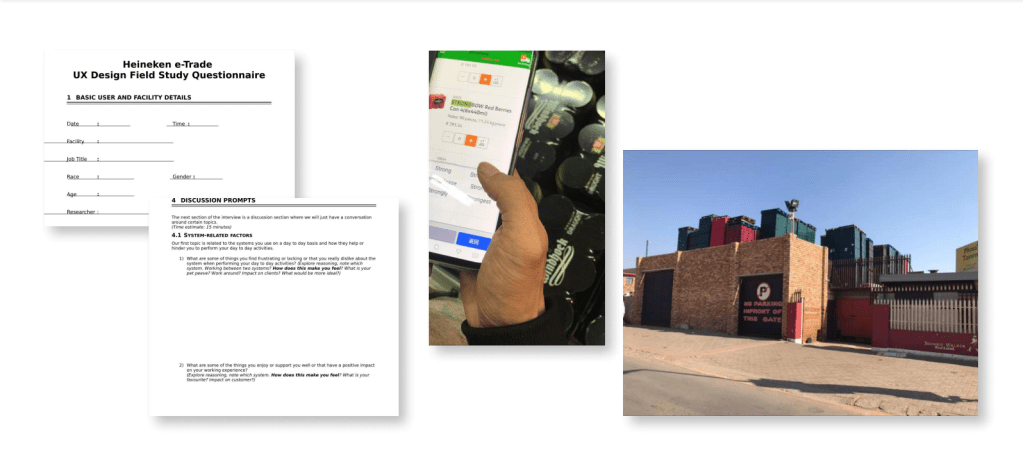
To understand user behavior in real-world settings, we conducted 45-minute contextual interviews with 8 users across various facilities. The goal was to capture the challenges users faced while interacting with the current system. By observing their daily tasks, tools, and workarounds, we gained valuable insights into pain points and opportunities for improvement.
Personas & User Journeys
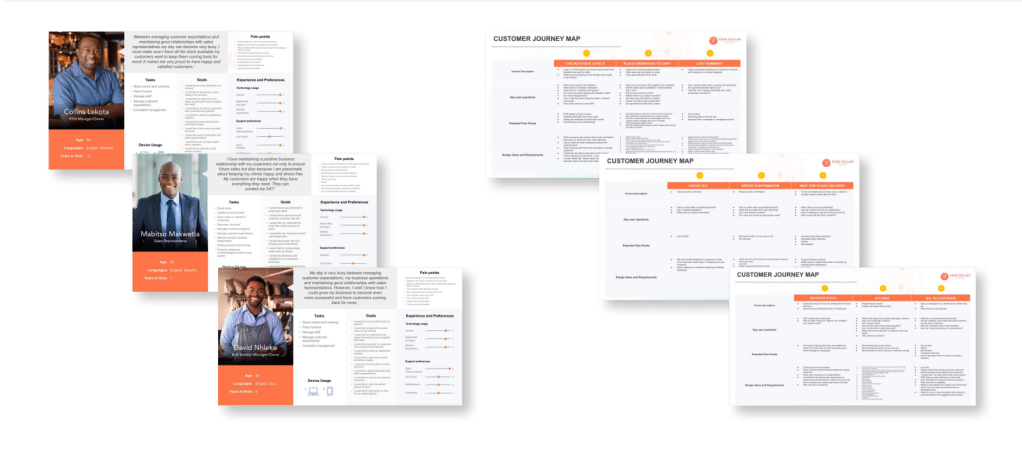
Based on the research, I created three personas representing key customer segments. These personas were used to map out user journeys and identify critical pain points in the current process. The personas helped guide design decisions and ensured that the solution would cater to a diverse range of users, from small business owners to large distributors.
Competitor Analysis
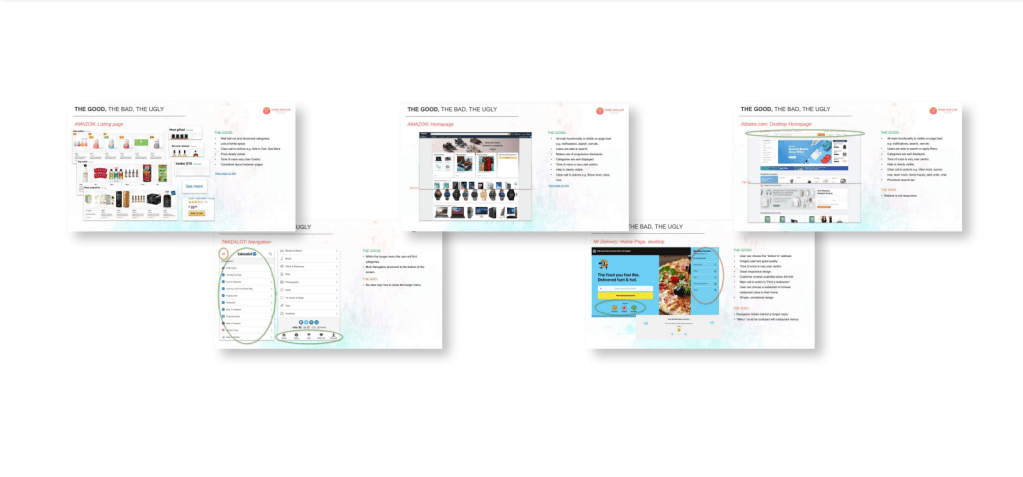
To gain a competitive edge, we conducted a thorough competitor analysis, focusing on Amazon, Alibaba, and other leading eCommerce platforms. We looked at features such as ease of navigation, checkout process, and product recommendations. This helped us identify best practices and areas where Heineken could differentiate itself.
Stakeholder Workshop
We facilitated a workshop with key stakeholders to align business goals with user needs. During the workshop, we mapped out the ideal user experience and identified features that were crucial for different user groups. This helped prioritize features that would have the most significant impact on both the business and users.
Information Architecture
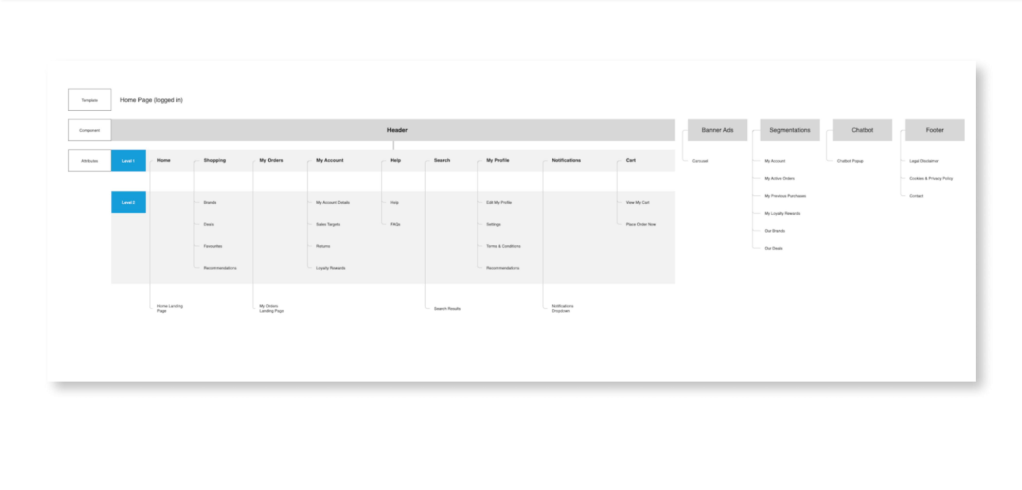
I developed a scalable information architecture that allowed for future growth while ensuring ease of navigation for current users. The architecture prioritized features like order management, loyalty programs, and product recommendations, ensuring that users could quickly find what they needed.
Templates and Wireframes
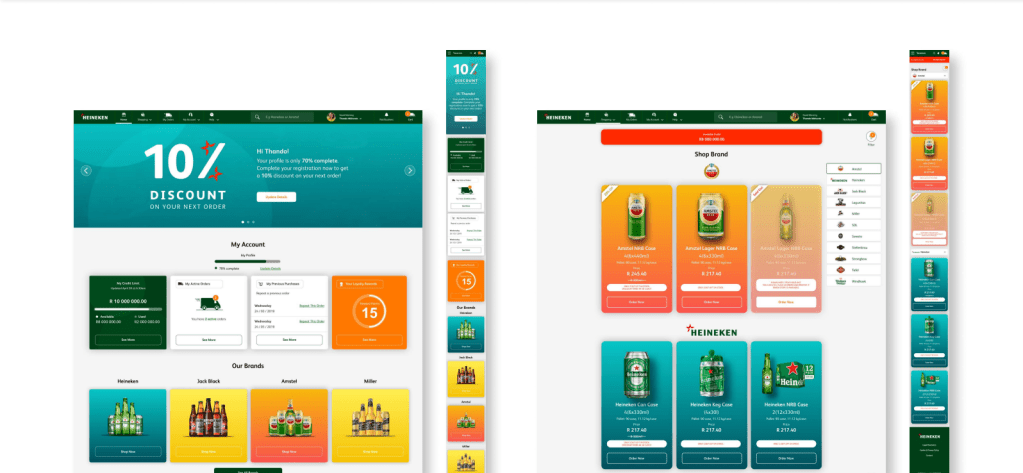
With the foundation set, I designed both low-fidelity wireframes and high-fidelity templates focused on prioritizing content, functionalities, and intended behaviors. The wireframes were optimized for both desktop and mobile, ensuring that the solution was accessible across all platforms.
Validation Usability Testing
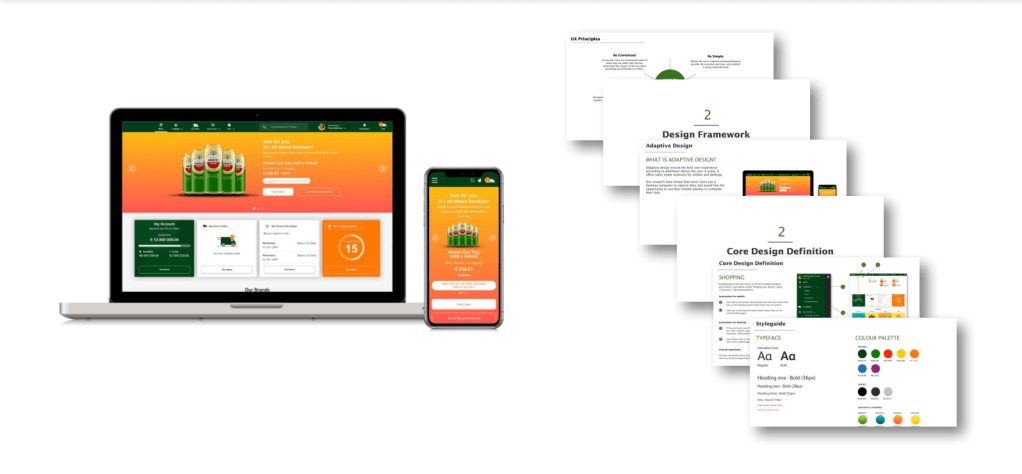
I built interactive prototypes for both mobile and desktop and conducted multiple rounds of usability testing. During testing, we validated the core design decisions, ensuring that the new interface was intuitive, functional, and aligned with Heineken’s business goals. Based on user feedback, I iterated on the design to further enhance the user experience.
The Solution
The redesigned Heineken eCommerce platform addressed the core challenges and delivered a seamless, scalable user experience. Key features included:
Intuitive Navigation
Simplified pathways for users to find and purchase products quickly.
Optimized Checkout Flow
A streamlined checkout process that reduced drop-offs and improved conversions.
Product Recommendations
Enhanced product suggestion features, encouraging upsell opportunities.
Mobile & Desktop Compatibility
A fully responsive design that catered to users on any device.
Scalable Information Architecture
A flexible structure that allowed for future growth without sacrificing ease of use.
The Results
Increased Conversions
Post-launch, Heineken saw a significant increase in online conversions due to the improved checkout process.
Reduced Call Center Dependency
The new self-service design reduced the need for customers to contact the call center, improving efficiency.
Improved Customer Satisfaction
Feedback from usability testing and post-launch surveys indicated a marked improvement in customer satisfaction.
Scalability
The platform was designed to handle increased traffic and transactions, ensuring that Heineken could grow its online presence without performance issues.
Reflection
This project reinforced the importance of aligning business goals with user needs. By conducting thorough research and involving stakeholders throughout the process, we were able to design a solution that not only improved the customer experience but also drove business growth. The iterative design process, backed by continuous user testing, ensured that the final product met the high standards expected by both Heineken and its customers.
Tools & Methods Used
Design Tools
Figma, Miro
Research Methods
Stakeholder interviews, user interviews, field studies
Prototyping & Testing
Low- and high-fidelity wireframes, interactive prototypes, usability testing
Collaboration
Cross-functional collaboration with product managers, developers, and UI designers
 Ignatius Ferreira (UX)