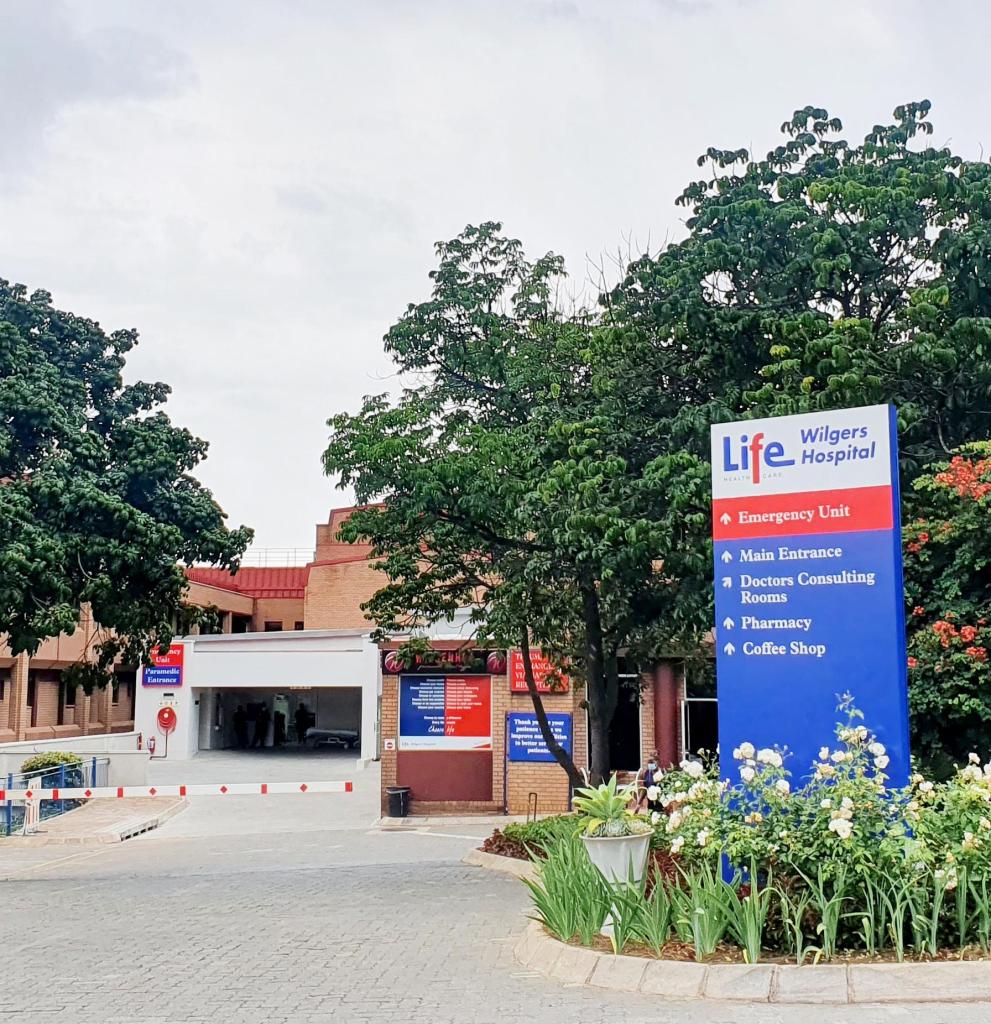
Project Overview
Challenge
Life Healthcare’s Clinical Information System (CIS) was outdated, causing inefficiencies in managing patient care across their hospital network. Clinicians struggled with a lack of streamlined access to patient data, which impacted the quality of care. The goal was to redesign the CIS to support better patient outcomes by improving usability, accessibility, and data integration.
My Role
As the Lead UX Designer, I was responsible for guiding the entire design process from discovery to delivery. I conducted stakeholder interviews, led user research with clinicians, and created prototypes to ensure that the new system would meet the diverse needs of its users.
Approach
• In-depth research to identify clinician pain points and workflow bottlenecks.
• Designed a comprehensive information architecture that aligned with clinical tasks and patient data management.
• Prototyping and usability testing to validate designs, ensuring the solution was intuitive and fit seamlessly into the hospital environment.
Outcome
• The redesigned CIS improved efficiency, allowing clinicians to access critical patient data faster and more accurately.
• Enhanced user satisfaction with more streamlined workflows and fewer interface barriers.
• Supported Life Healthcare’s objective of delivering better patient care by providing a more robust and user-friendly system.
The Challenge
Life Healthcare, one of the largest private hospital groups in South Africa, sought to modernize their Clinical Information System (CIS) to improve the management of patient data, streamline workflows, and enhance the quality of care. The existing system had usability issues, inefficient processes, and lacked intuitive information architecture, which hindered the day-to-day activities of healthcare providers.
The task was clear: design a computer-based platform that allows healthcare providers and administrators to seamlessly collect, store, manage, and retrieve clinical information and patient data. As the Lead UX Designer, I led a comprehensive research and design process to ensure the new platform would cater to the needs of all users—ranging from doctors to administrative staff—while maintaining Life Healthcare’s high standards of patient care.
My Role
I worked closely with stakeholders, doctors, and healthcare professionals to design a system that aligned with Life Healthcare’s business goals while keeping users’ needs at the forefront. The process involved everything from conducting field studies to designing high-fidelity wireframes, with a strong focus on understanding how the system would impact daily tasks in a clinical setting.
The Process
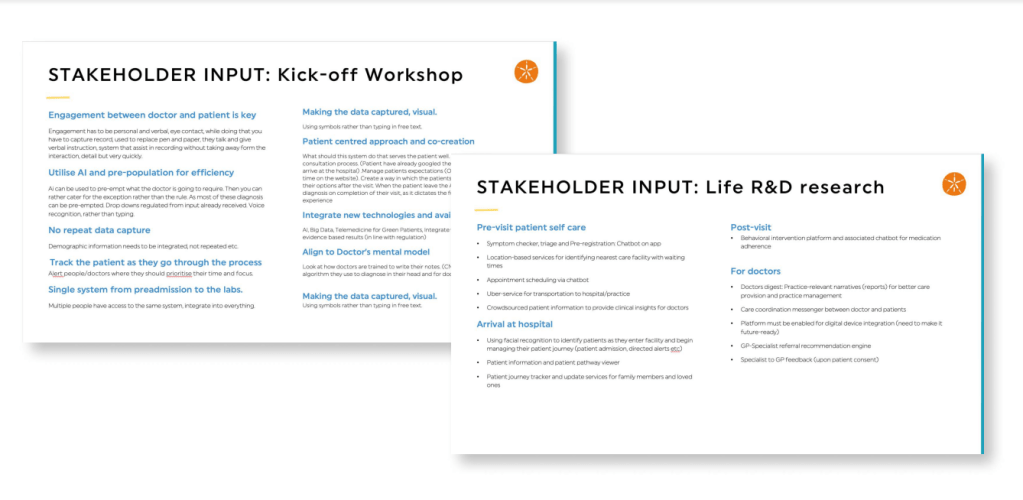
Stakeholder Workshops
We began by facilitating workshops with key stakeholders, including doctors, hospital administrators, and IT professionals. The goal was to align Life Healthcare’s business objectives with the system’s functional requirements. Through collaborative activities, we mapped out the “ideal system,” identifying key pain points in the current system and the features that would be most important to different user groups.
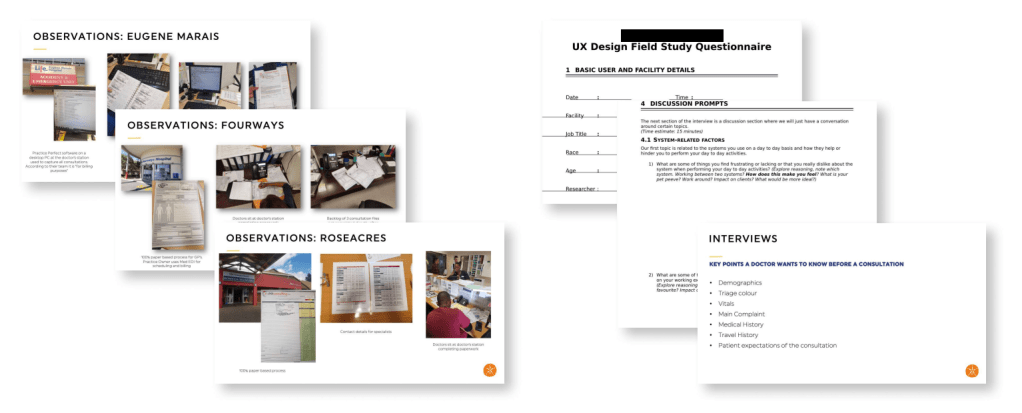
Field Studies
To fully understand the environment in which this system would be used, I conducted field studies across several Life Healthcare hospitals. We observed 13 doctors in action and interviewed 10, gaining invaluable insights into their daily routines and the challenges they faced with the existing CIS.
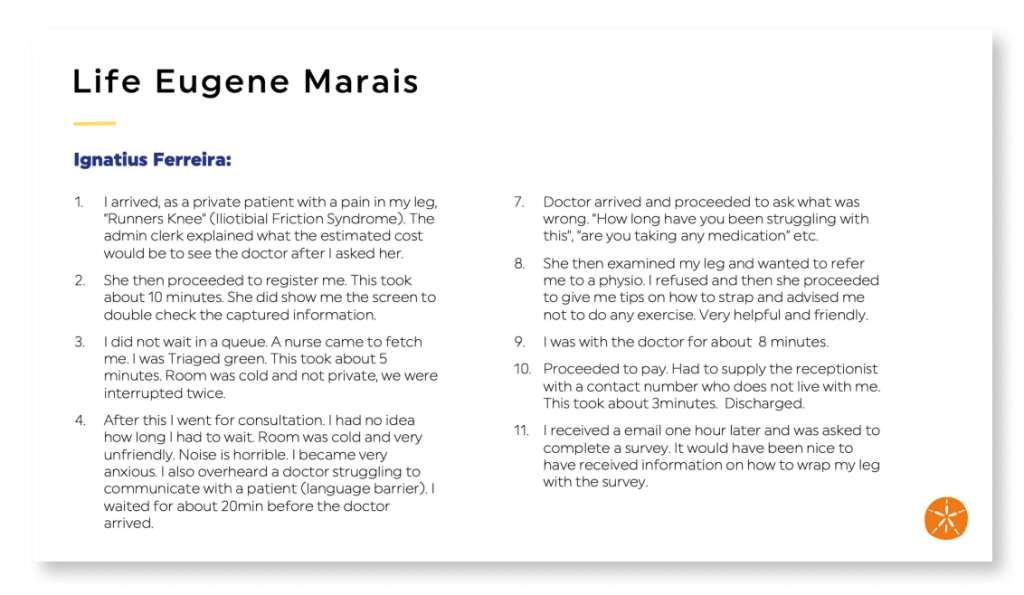
I also went undercover as a patient, experiencing firsthand how the consultation process worked, from registration through discharge. These observations and insights helped shape the foundation of the new system’s design.
Personas & User Journeys
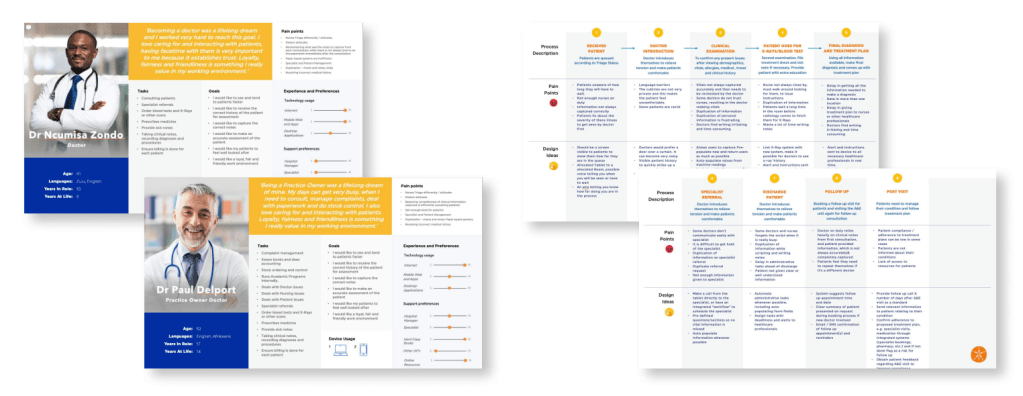
Using data from the field studies, I created detailed personas for key user groups—such as practice owners and general practitioners—and mapped out their user journeys. These personas highlighted the specific needs of each group, from streamlined appointment scheduling to the ability to quickly access patient histories during consultations. These journeys guided the redesign of the process.
Competitor Analysis
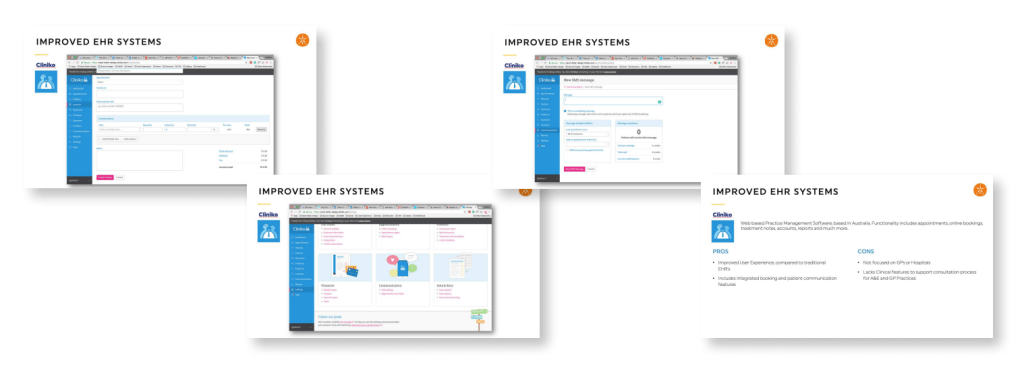
A comprehensive competitor analysis helped us benchmark best practices for electronic health record (EHR) systems. We analyzed similar systems like Cliniko to understand how they addressed similar challenges and where Life Healthcare could differentiate itself by offering a superior user experience.
Information Architecture
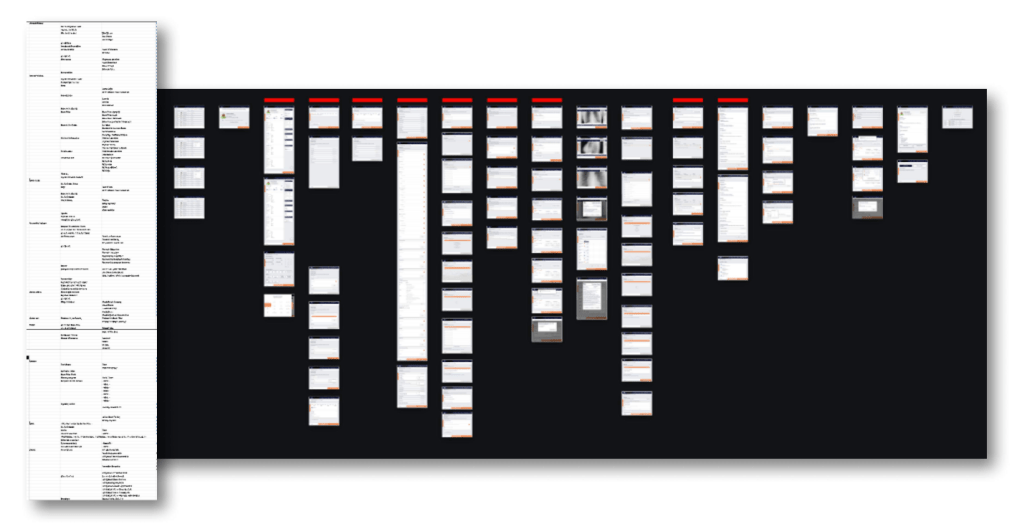
Based on research and stakeholder feedback, I developed a clean and intuitive information architecture. Prioritizing the most critical features, I ensured that navigation was seamless and that healthcare professionals could quickly access patient data, manage consultations, and complete administrative tasks without any friction.
Templates & Wireframes
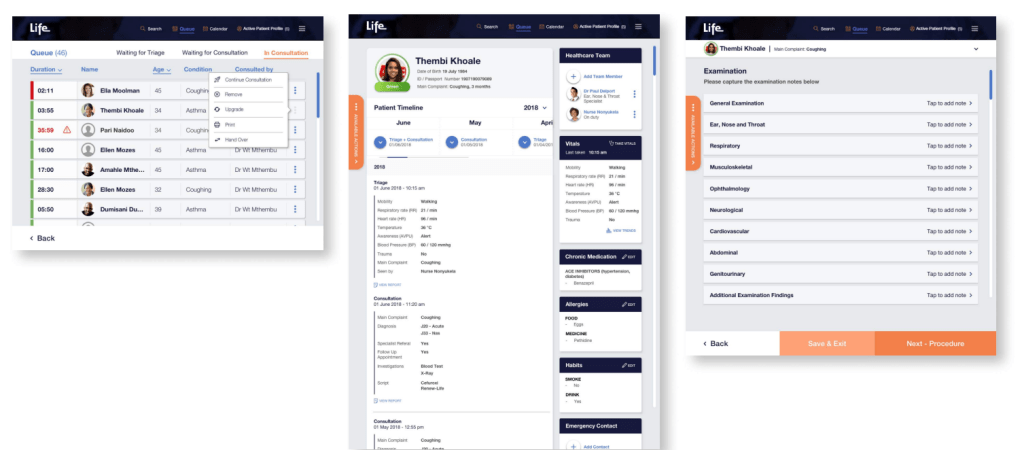
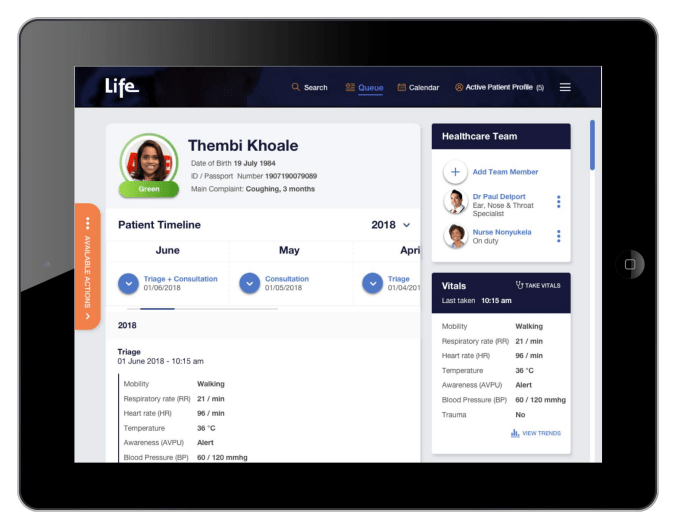
I designed high-fidelity wireframes that prioritized functionality and ease of use, ensuring that the system worked efficiently across tablet devices, the primary tool used by doctors in the field. The designs focused on the layout of patient data, consultation workflows, and administrative functions, with special attention given to streamlining the triage and consultation processes.
Usability Testing & Iteration
I created interactive prototypes for tablet devices, which we used to conduct usability testing with real healthcare professionals. Feedback from these tests was used to refine the system further, focusing on improving navigation, reducing cognitive load, and ensuring that the system supported quick, accurate decision-making in the high-pressure clinical environment.
The Outcome
The redesigned Clinical Information System transformed how Life Healthcare’s doctors and administrative staff interact with patient data. By reducing inefficiencies and creating a user-friendly interface, the system allowed healthcare professionals to focus more on patient care and less on administrative tasks.
Key Takeaways
This project demonstrated the power of user-centered design in healthcare, where understanding the real-world challenges of doctors and administrators can lead to more effective and efficient systems. By focusing on the needs of Life Healthcare’s users and aligning those with business objectives, we delivered a solution that made a tangible difference in the daily lives of healthcare professionals.
Tools & Methods Used
Research
Stakeholder interviews, field studies, undercover patient observations
Design
Axure, Sketch
Prototyping
High-fidelity wireframes for tablet interfaces
User Testing
Usability testing with healthcare professionals
Collaboration
Workshops with stakeholders, IT teams, and medical staff
 Ignatius Ferreira (UX)