Project Overview
Challenge
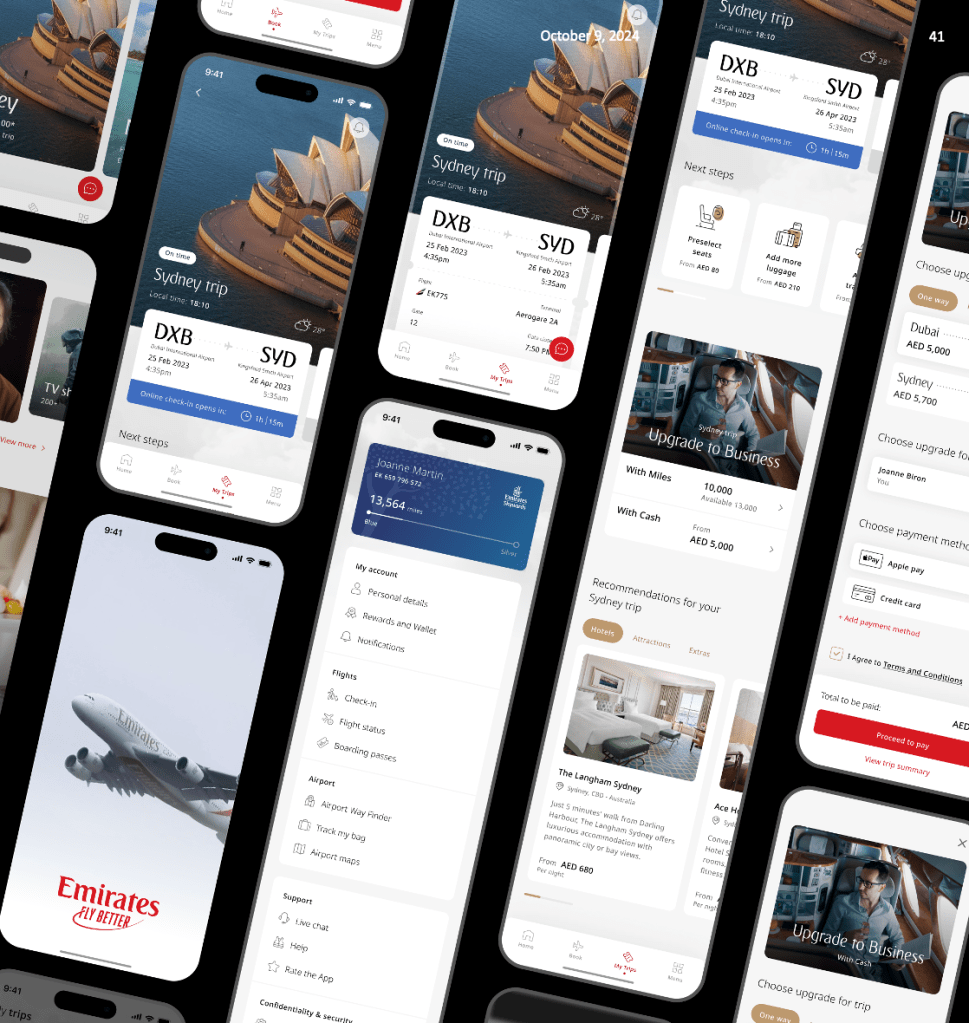
Emirates needed a fully functional prototype to showcase the potential redesign of its app as part of a Proof of Concept (POC). The goal was to improve user experience by addressing navigation challenges and incorporating enhanced features for better service and travel planning. The solution had to be delivered within a strict three-week timeline.
My Role
As the Lead UX Designer, I was responsible for guiding the team through a rapid discovery-to-delivery process. This included conducting research, collaborating with stakeholders, and designing the app’s user flow and interface. I ensured the prototype was not only functional but also visually compelling, ready for stakeholder buy-in.
Approach
• Conducted user research and stakeholder interviews to identify pain points and align with business goals.
• Created personas, user journeys, and wireframes for key features.
• Developed a high-fidelity prototype and tested it for usability, iterating based on feedback to improve interactions and flows.
Outcome
• The team successfully delivered a working prototype within the 3-week timeframe.
• The POC allowed for rapid validation and laid the groundwork for a full-scale project after stakeholder approval.
• The app redesign proposed enhanced navigation and a streamlined user experience, ready for further development upon business sign-off.
Key Takeaways
• Rapid iteration and collaboration were critical to delivering a compelling prototype within a tight deadline.
• The POC was an essential step in securing business approval and showed the potential for future growth and improvement in the Emirates app’s user experience.
The Challenge
Emirates sought to transform their mobile app from a basic flight booking tool into a comprehensive travel companion. The app needed to anticipate and resolve user pain points throughout the entire journey — from booking a flight to arriving at baggage claim. With an aggressive timeline of just three weeks, I was tasked with delivering a Proof of Concept (POC) that would lay the foundation for a complete app redesign. This POC needed to showcase 12 critical features while delivering a seamless, user-centric experience.
This was a high-stakes project, with a tight deadline and immense pressure to meet both business and user expectations. My role as the Lead UX Designer was not only to ensure the POC’s timely delivery but to drive a design that solved real problems, improved the user experience, and aligned with Emirates’ business objectives.
My Role and Responsibilities
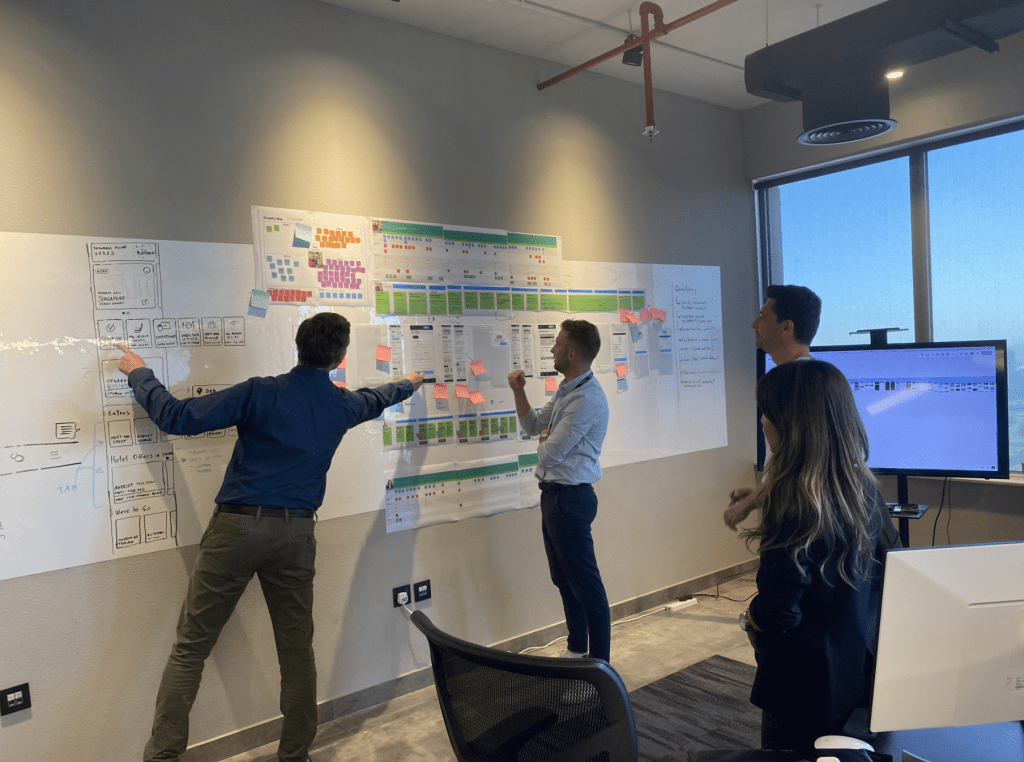
As the Lead UX Designer on this project, I was responsible for:
Stakeholder Collaboration
Conducting stakeholder interviews to clarify business goals and align the scope of the POC.
User Research
Leading user interviews to uncover pain points, goals, and behaviors across various touchpoints in the user journey.
Persona Development
Creating personas to guide our design decisions and ensure we were solving the right problems for diverse user groups.
User Journey Mapping
Mapping out the end-to-end user journey to identify gaps and optimize for a seamless experience.
Information Architecture
Designing a clear and intuitive structure for navigating key features within the app.
Designing 70+ Screens
Rapidly developing high-fidelity wireframes and prototypes for the 12 core features required by the POC.
Usability Testing & Iteration
Conducting usability tests on the prototypes and iterating based on feedback to refine and improve the experience.
Prototype Delivery
Delivering a fully functional, high-fidelity prototype within the three-week deadline, ready for business sign-off.
The Approach
To meet the tight deadline and deliver a high-quality POC, I implemented a focused design process:
Stakeholder Interviews
I began by meeting with key stakeholders to clarify business objectives and understand the broader vision for the app. This ensured that the POC would align with Emirates’ strategic goals while addressing critical user needs.
User Research
Through user interviews, I uncovered common pain points that travelers face while using the existing app. This included difficulties with navigation, lack of personalization, and frustration with features that didn’t support the entire travel journey.
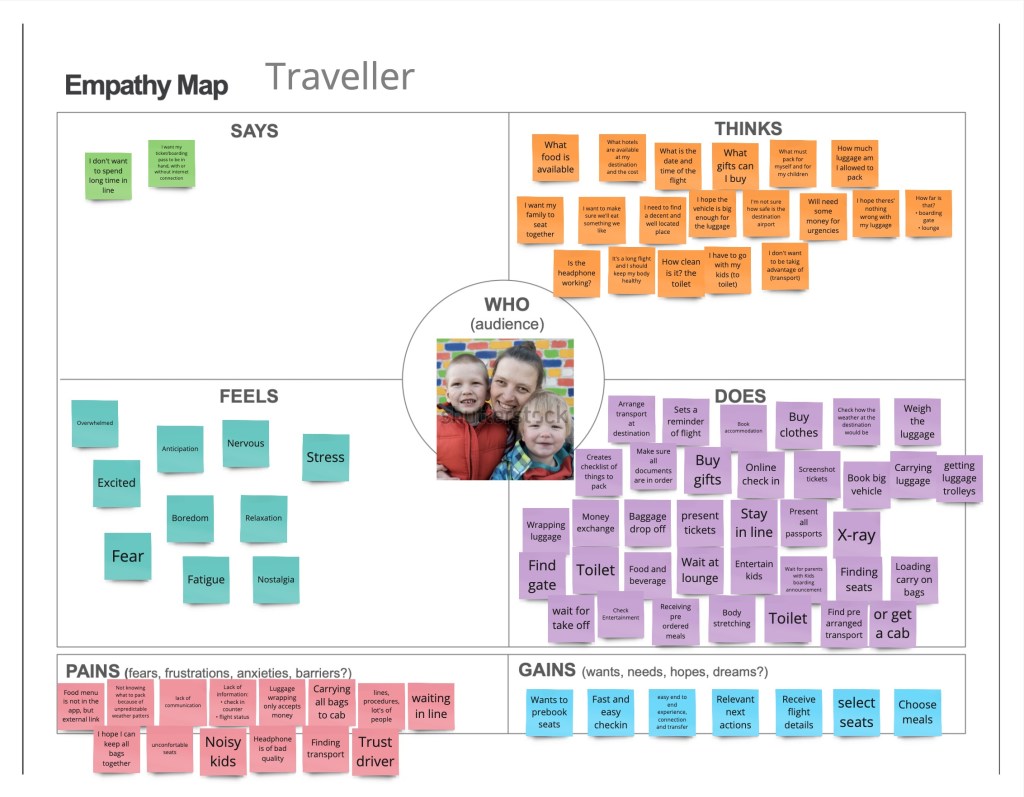
Persona Creation
Based on the research, I developed user personas representing the different types of travelers using the Emirates app. These personas helped guide design decisions and ensured that we addressed the unique needs of each user group.
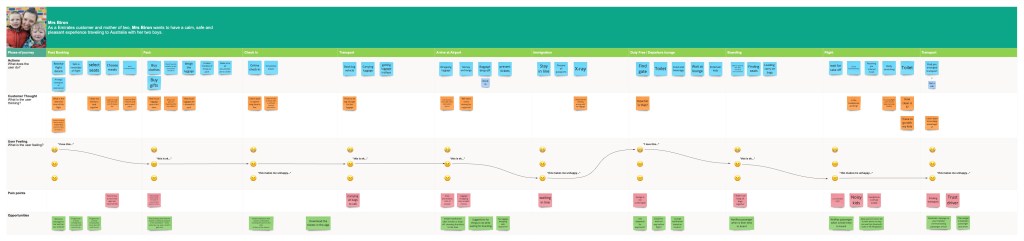
User Journey Mapping
I mapped out the user journey from booking a flight to post-flight activities like baggage claim. This allowed us to identify areas where the app could better support users and create a more cohesive experience throughout their trip.
Information Architecture
With the core features defined, I created an intuitive information architecture that would make it easy for users to navigate the app. The goal was to ensure quick access to important functions like flight check-ins, upgrades, and inflight entertainment.
Designing 70+ Screens
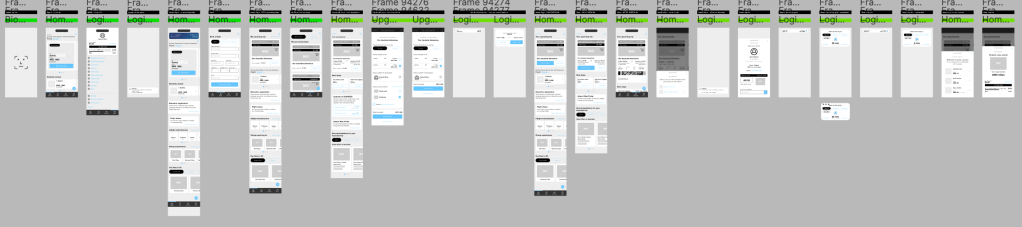
Given the scope of the POC, I quickly developed over 70 screens, covering 12 travel-related features. This included everything from booking a flight and checking in to accessing inflight services and exploring destination information.
Usability Testing & Iteration
I led usability testing sessions to gather feedback on the initial prototypes. These sessions allowed us to iterate quickly, refining the interface to ensure it was intuitive, easy to use, and met user expectations.
Prototype Delivery
In just three weeks, I delivered a high-fidelity prototype that not only showcased the 12 essential features but also delivered a fully functional, seamless user experience. The prototype was ready for business sign-off and set the stage for a full-scale redesign.
The Solution
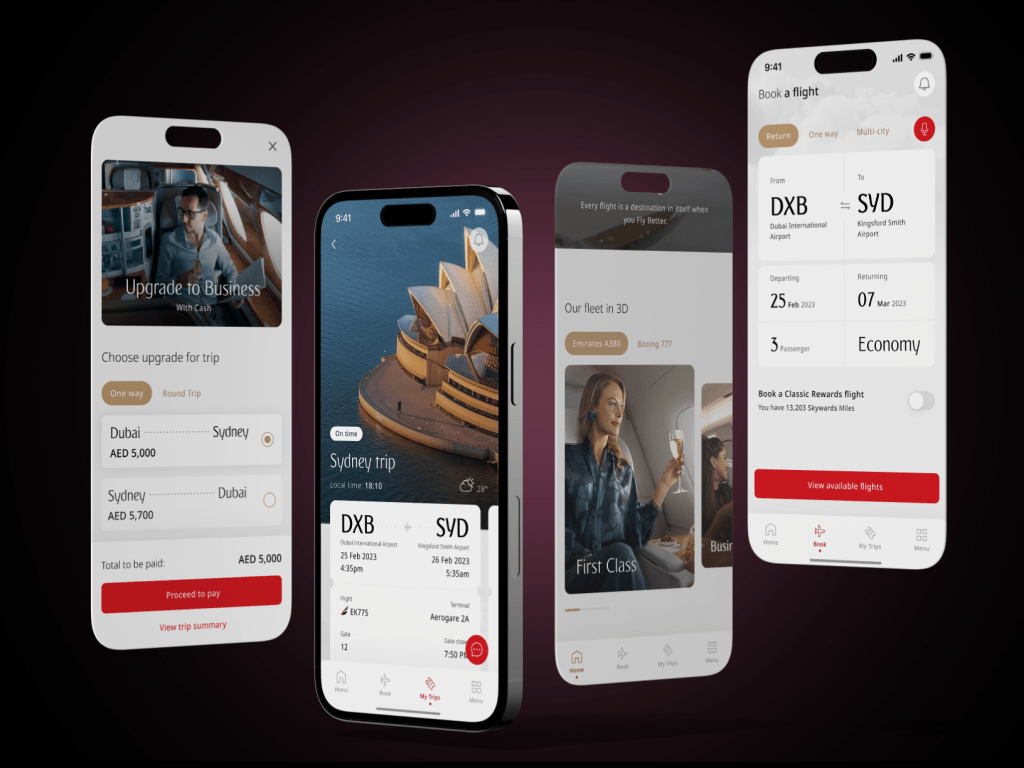
By following a structured and agile design process, I successfully delivered a POC that achieved all of our goals:
User-Centric Design
The app was designed with travelers in mind, providing a smooth and intuitive experience from start to finish. Each feature was tailored to solve specific user pain points, such as simplifying the booking process and providing real-time flight updates.
12 Critical Features
The POC showcased 12 essential features, including flight booking, check-ins, seat upgrades, inflight entertainment, and personalized travel recommendations.
Seamless Navigation
The new information architecture allowed users to easily navigate between features, ensuring they could access key functions with minimal effort.
The Results
The POC was delivered to the Emirates Product Owner within the tight three-week deadline, receiving overwhelmingly positive feedback from both stakeholders and users. The POC successfully addressed key business goals while solving common user pain points, providing a compelling case for the full app redesign.
Positive Feedback
Both business stakeholders and users praised the seamless experience and the focus on solving real user problems.
Transformation of the App
The success of the POC paved the way for a complete redesign of the Emirates app, transforming how travelers interact with the brand.
Proof of Concept to Full Project
The POC evolved into a fully-fledged project, and the features developed as part of the POC are now being integrated into the final version of the app.
Key Learnings & Reflections
This project highlighted the importance of a user-centered approach, even under tight deadlines. By staying focused on the user journey and rapidly iterating based on feedback, I was able to deliver a POC that exceeded both business and user expectations. This experience reinforced the value of stakeholder collaboration, agile processes, and the power of design in transforming digital experiences.
Tools & Methods Used
Design Tools
Figma, Miro
Research Methods
Stakeholder interviews, user interviews
Prototyping & Testing
High-fidelity wireframes, usability testing, iterative feedback
Collaboration
Cross-functional collaboration with product managers and UI designers
 Ignatius Ferreira (UX)