
Project Overview
Challenge
Yalago, a B2B service provider in the travel industry, needed a scalable, user-friendly platform to serve both travel operators and suppliers. The existing system was outdated, creating friction and limiting engagement.
My Role
As Lead UX Designer, I directed the project from user research through to delivery. I focused on aligning business goals with user needs, optimizing the user flows, and delivering a design that catered to both frequent users and first-time visitors.
Approach
• Conducted user research and usability tests to understand pain points and refine the user journey.
• Designed scalable information architecture and user flows to ensure seamless experiences across devices.
• Collaborated with cross-functional teams to ensure the solution met both business and user objectives.
Outcome
• Enhanced User Experience
Simplified navigation,and responsive design increased user engagement.
• Increased Engagement
Boost in user interaction due to intuitive flows and tailored content.
• Scalability
The platform now accommodates Yalago’s growth and expansion goals, ensuring future sustainability.
The Challenge
Yalago, a B2B travel industry platform, connects travel services and hotel rooms with OTAs, travel agents, airlines, and loyalty programs. The challenge was to redesign and modernize Yalago’s digital platform to meet the needs of two core user groups: businesses and travel operators seeking Yalago’s services, and suppliers wishing to partner with Yalago. The existing website struggled with usability issues, lacked a scalable framework, and failed to reflect the brand’s innovative position in the market.
User Goals and Pain Points
Businesses and travel operators wanted a clear, intuitive process for discovering services and partnerships.
Suppliers faced challenges with the platform’s outdated features, making it difficult to connect seamlessly with Yalago’s B2B offerings.
Both user groups experienced friction in navigation, which affected engagement and overall satisfaction.
My Role
As the Lead UX Designer, I was responsible for the end-to-end design process, from user research to final delivery. My role included:
• Leading user interviews and competitive benchmarking to identify core pain points.
• Mapping out the user journeys for different user personas, ensuring alignment with business needs.
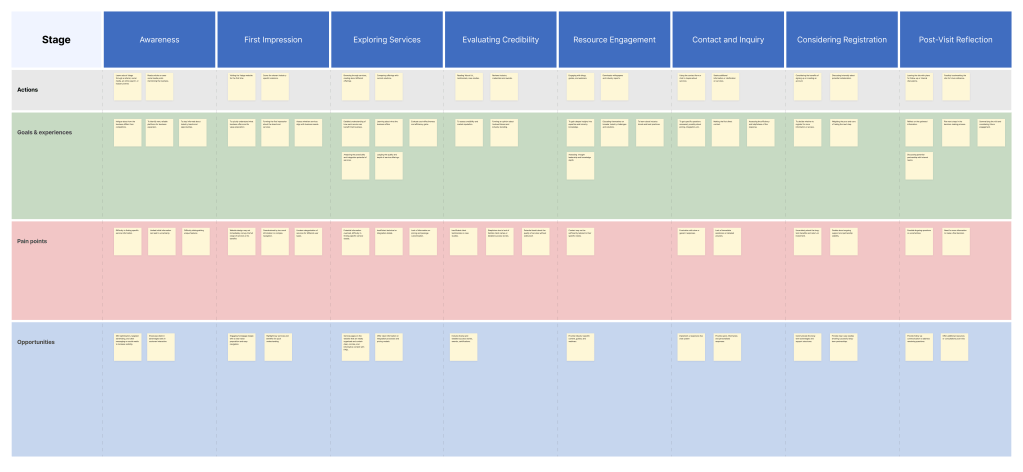
• Redefining the information architecture to make navigation intuitive for both travel operators and suppliers.
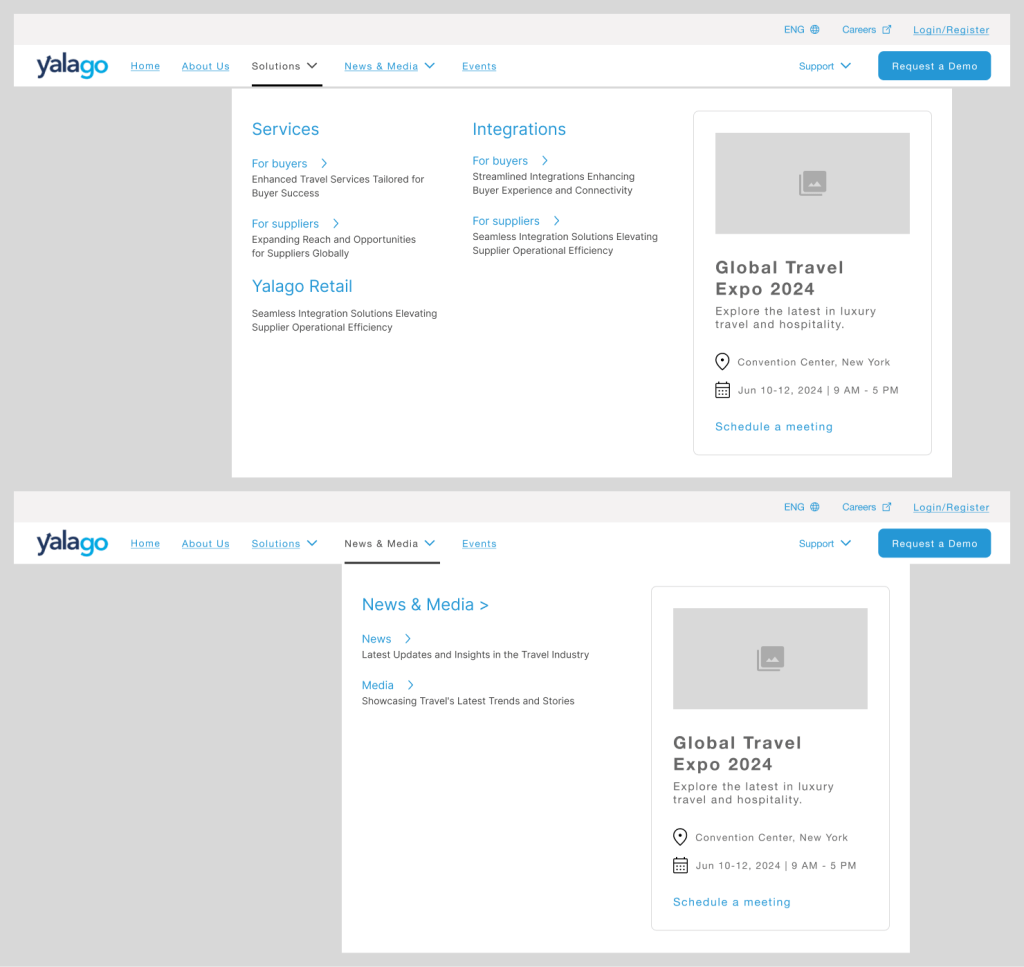
• Designing and iterating high-fidelity wireframes and prototypes that reflected the improved user flows.
• Collaborating with cross-functional teams to ensure the solution addressed both user and business objectives.
The Solution
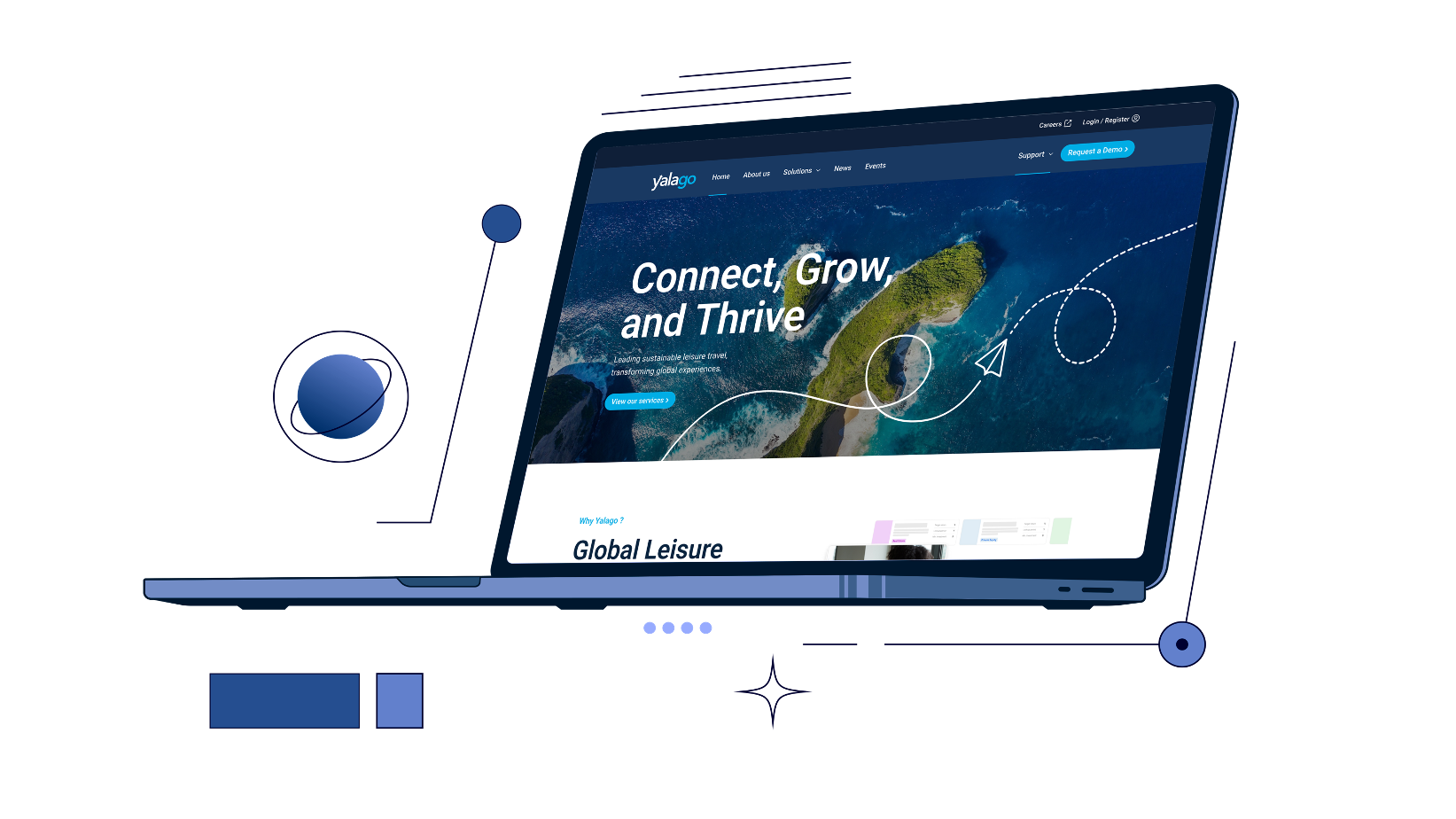
To address the challenges, we conducted extensive user research and analyzed current digital experiences across the travel sector. Insights from this research, combined with best practices, led to the creation of a strategic UX roadmap for Yalago’s platform.
Key improvements included:
Optimized User Journeys
Simplified and structured stages for travel operators, from discovery to inquiry and registration, ensuring a seamless experience.
Improved Navigation
Implemented clearer paths for users to explore services, increasing engagement in the resource exploration stage.
Refined UI Design
A modern, dynamic visual identity that reflects Yalago’s brand, providing users with a more engaging and trustworthy experience.
The updated platform now better supports users in finding services and connecting with suppliers quickly and effortlessly. We integrated clear call-to-actions for different stages, from registration to post-visit reflection, making the user experience smooth and intuitive.
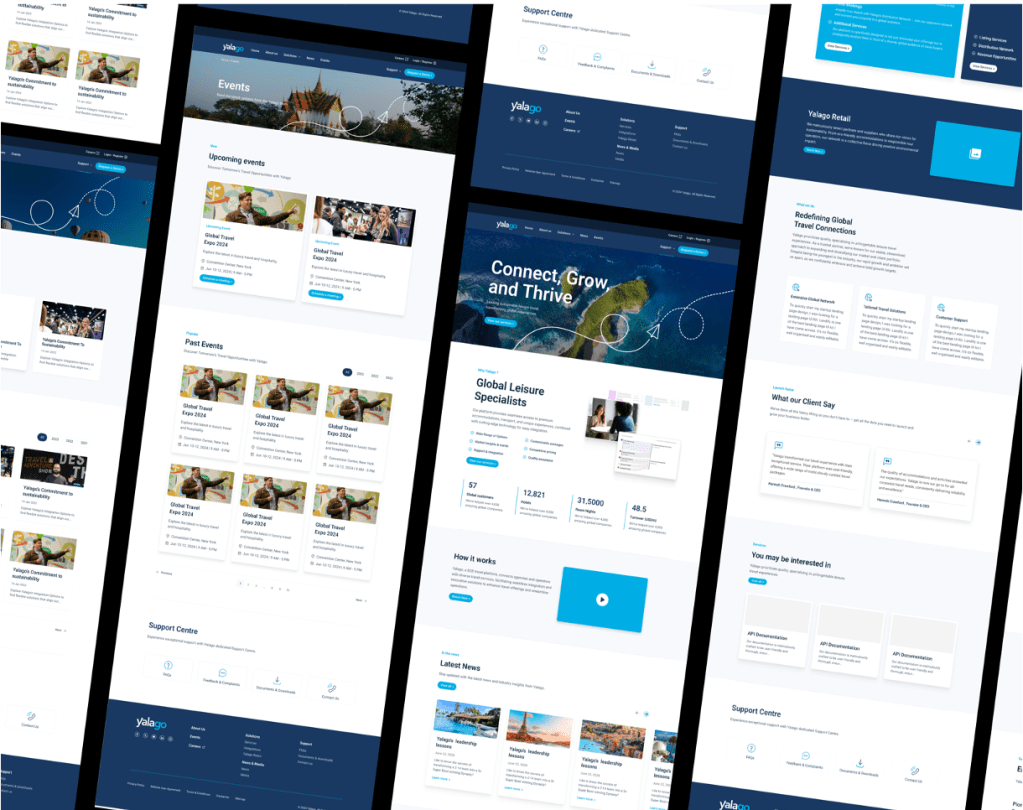
Results
By leveraging our research and aligning with best practices, Yalago’s redesigned platform delivered:
Enhanced User Experience
A seamless and engaging experience for both customers and suppliers, significantly improving usability and satisfaction.
Increased Engagement
The intuitive navigation and dynamic content led to increased user engagement and longer session durations.
Scalability
The new design and architecture allowed for easy scalability, accommodating future growth as the business evolves.
Tools & Methods Used
Design Tools
Figma, Miro
Research Methods
User interviews, stakeholder workshops, competitive analysis
Prototyping & Testing
High-fidelity wireframes, usability testing, iterative feedback loops
Collaboration
Cross-functional collaboration with product managers, development teams and UI Designers
 Ignatius Ferreira (UX)